Menstrual Health
Menstruation is a natural part of life. Understanding your cycle, hygiene and body can help you make informed choices with confidence.
Educational information only — not a substitute for professional medical advice.
Break the taboo
Periods are a natural biological process, yet conversations around menstruation are still surrounded by embarrassment, myths and silence.
Periods are normal.
Questions are normal.
Talking about them should be normal too.
Four phases, described the way they actually behave — overlapping, uneven, and different from one person to the next.
Menstruation
The uterine lining is shed.
Day 1 is the first day of proper bleeding
If no pregnancy has occurred, hormone levels fall and the lining built up over the previous cycle leaves the body. Bleeding commonly lasts somewhere between two and seven days, and is often heaviest in the first day or two.
You might notice
A cycle is drawn as a circle because it repeats, not because it keeps time. Length, symptoms and even whether ovulation happens can differ between people, and between one of your own cycles and the next.
What is normal?
Your own pattern is the most useful baseline you have. A change from it tells you more than any comparison to someone else.
Cycle length
Often 21–35 days
Measured from the first day of one period to the day before the next. In the first years after periods begin, cycles are commonly longer and less predictable — sometimes up to about 45 days — and usually settle with time. They shift again approaching menopause.
Duration
Often 2–7 days
Some people bleed for two days and some for a week, and both can be ordinary for the person having them. A lasting change from your own usual length is more meaningful than the number itself.
Flow
Usually heaviest early
There is no volume you are supposed to reach. Clinical guidance has largely moved away from millilitres towards a simpler question: is the bleeding limiting what you can do? If it is, that is reason enough to ask about it.
Colour
Bright red to dark brown
Darker blood is generally older blood that took longer to leave the body, which is why the start and the end of a period often look different from the middle.
Symptoms
Wide, and personal
Cramping, tender breasts, bloating, headaches, tiredness, changes in mood, appetite or sleep. Some people notice a great deal and some notice almost nothing. Neither is a problem in itself.
Timing
Rarely identical
Stress, illness, travel, sleep, weight change, exercise, breastfeeding and contraception can all move a cycle. A few days either way is common and does not need explaining.
Menstrual hygiene
01
Change menstrual products according to the product instructions, your flow and your own comfort. Heavier days simply mean more often.
02
Wash your hands before and after changing a menstrual product. It is the easiest habit on this list and the one most often skipped in a hurry.
03
Washing the outside with plain warm water is enough. The vagina cleans itself, and scented washes, douches and antiseptics tend to irritate rather than help.
04
Wrap used disposable products and put them in a bin, following local waste-management guidance. Flushing blocks drains and moves the problem downstream.
05
Pads, tampons, cups, discs, period underwear — the right product is the one that fits your flow, your day and your circumstances. None of them is more hygienic in the abstract.
School, work & travel
Most of what gets in the way is not the bleeding. It is a missing bin, a door that does not lock, or the feeling that you have to explain yourself.
School
She should be able to learn without embarrassment.
A spare product in a bag, a teacher who can be asked, and a toilet with a door that locks and a bin inside it. Most missed lessons are a facilities problem, not a health one.
Work
She should be able to work with dignity and access to appropriate facilities.
Somewhere private to change, somewhere to wash, and a bin that gets emptied. Being able to step away for five minutes without explaining why covers most of what is actually needed.
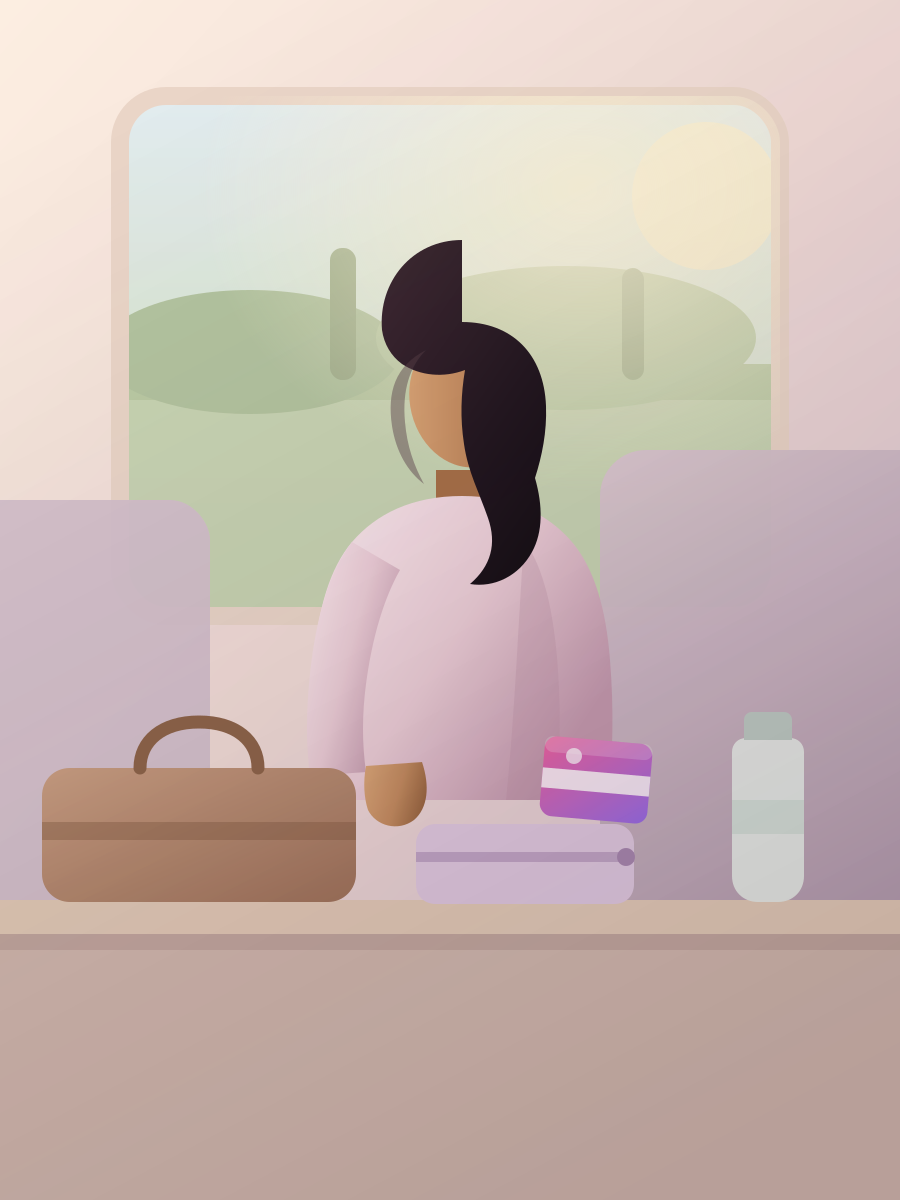
Travel
She should be able to travel with confidence and preparation.
Enough supplies for longer than you expect to be away, something to wrap and carry used products in, and a rough idea of when your period is due. Long journeys and time changes can shift the timing.
Six beliefs that still circulate. The cost of them is not embarrassment — it is missed school, untreated pain and questions nobody felt able to ask.
Menstruation is a natural biological process. Menstrual blood is a normal mix of blood and uterine tissue — not waste, and not a sign of illness or uncleanliness.
Twenty-eight days is an average, not a rule. Cycle length varies between individuals and changes across a lifetime — after periods first begin, with age, and approaching menopause.
Open, respectful conversations improve awareness and reduce stigma. Silence is the reason so many questions go unanswered for so long.
There is no health reason to avoid any of them. Many people find that gentle movement and warmth ease cramping rather than worsen it.
Some cramping is common. Pain that regularly stops you doing ordinary things is not something you have to accept, and it is worth discussing with a healthcare professional.
It is less likely, but it is possible. Sperm can survive for several days, and ovulation does not always arrive when a calendar predicts.
When to seek advice
Most period symptoms are ordinary. A few are worth describing to someone who can examine you — persistent, unusual, or a clear change from your own pattern.
Worth a conversation
If you are concerned about your symptoms, speak with a qualified healthcare professional.
None of these means something is wrong. They are the things worth describing to someone who can examine you and answer properly — which is the whole point of noticing them.
Educational information only — not a substitute for professional medical advice.
Everyone’s responsibility
Girls need accurate information. Boys need understanding. Families need open conversations. Schools and workplaces need supportive facilities.
Knowledge creates confidence.
Dignity creates change.
Education hub
Seven guides, written to be read once and remembered — not to be scrolled past.
7 guides
Care N Safe
Explore menstrual-care products designed with comfort and protection in mind.
Educational information only — not a substitute for professional medical advice.
Sources: World Health Organization; UNICEF menstrual health guidance; NHS (United Kingdom); American College of Obstetricians and Gynecologists; NICE guideline NG88, heavy menstrual bleeding.